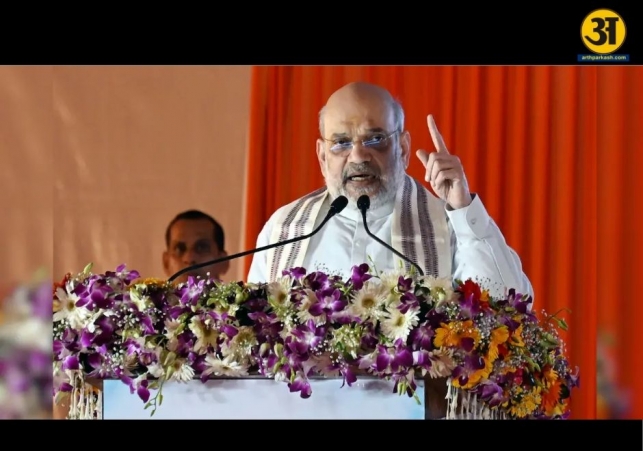
Amit Shah raises alarm over security and population shifts
Amit Shah warns of infiltration and demographic changes in India
Union Home Minister Amit Shah has recently highlighted the impact of illegal migration and demographic shifts on India’s population and society. He said that understanding infiltration, population changes, and democracy is essential to protect the country’s culture, languages, and independence. Shah pointed out that the rise in population of certain communities is not only due to higher fertility rates but is significantly driven by undocumented migration.
Shah cited census data from 1951 to 2011 to explain these trends. In India, the Hindu population decreased from roughly 84 per cent in 1951 to about 79 per cent in 2011, while the Muslim population increased from 9.8 per cent to 14.2 per cent during the same period. He emphasized that this change is largely due to infiltration rather than natural growth. According to Shah, illegal migration has affected states like West Bengal, Assam, Kerala, and parts of the Northeast, creating cultural, economic, and security challenges.
Impact of infiltration on states
In West Bengal, the borders are porous, and this has led to significant demographic changes. The Hindu population has fallen from 78.45 per cent in 1951 to 70.54 per cent in 2011, while the Muslim population increased from 19.85 per cent to 27.01 per cent. Certain districts, including Murshidabad, Malda, and Uttar Dinajpur, now have over 50 per cent Muslim population. Assam has seen similar shifts, with the Hindu population decreasing by 9.3 per cent and the Muslim population rising by 9.5 per cent, reaching 34.22 per cent in 2011. Kerala and other southern states have also witnessed growing Muslim populations, according to various reports.
Illegal migration has created social and economic pressures in affected areas. Immigrants often settle among communities from which they originate, leading to increased competition for jobs, land, and government benefits. This has sometimes caused tensions and threatened the social cohesion of local communities. In addition, unchecked migration can pose security risks and even enable separatist movements to gain support in vulnerable regions. Shah noted that infiltration, if not addressed, could gradually reshape India’s demographic and political landscape.
ALSO READ: Inflammation linked to 60% of global deaths: What you need to know
ALSO READ: Shoe strike at Constitution: tensions rise amid hate speech
To address these challenges, Shah has repeatedly called for the full implementation of the Citizenship Amendment Act (CAA) and a nationwide National Register of Citizens (NRC). He believes these measures, along with regular Special Intensive Revision (SIR) of electoral rolls, are necessary to identify illegal immigrants and prevent their exploitation of government resources. For example, during elections in Bihar, nearly 66 lakh voters were removed from the voter list, many of whom were found to have dubious documentation or were illegal migrants.
Shah also warned that infiltration is often supported by external and internal actors. He mentioned Islamist agencies, deep-state networks, NGOs, media platforms, and even some politicians who aim to increase vote banks at the nation’s expense. These forces, he said, indirectly encourage demographic shifts that can destabilize communities, erode cultural identity, and threaten national security.
The issue of population changes and illegal migration is complex and sensitive. Census data and demographic studies confirm that some communities in India are growing at a faster rate than others, often due to cross-border migration. West Bengal, Assam, and Kerala illustrate how infiltration can alter the social and cultural fabric of states. Amit Shah’s emphasis on these issues highlights the importance of legal measures like the CAA, NRC, and SIR to protect citizens’ rights and maintain national stability.
Understanding the connections between infiltration, demographic change, and democracy is critical. Without awareness and appropriate measures, these shifts could have long-term consequences for India’s social, cultural, and political landscape. By monitoring population trends and enforcing laws against illegal migration, India can better preserve its diversity, security, and democratic values for future generations.
The Home Minister’s warnings serve as a reminder that demography is not just a statistic; it is deeply connected to national identity, governance, and the security of all citizens. Awareness, vigilance, and action are key to ensuring that India continues to thrive as a united and inclusive nation.
Related News